

My Activity Tracking
26
mi
My target 60 mi
My Frontline Walk 2026 - Project Monte Cassino
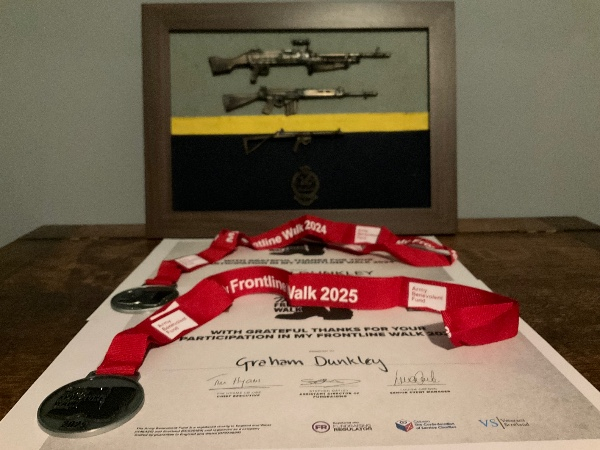
Since 2024, Coach Baxter and I have participated in the My Frontline Walk every November, raising over £1,300 for the Army Benevolent Fund.
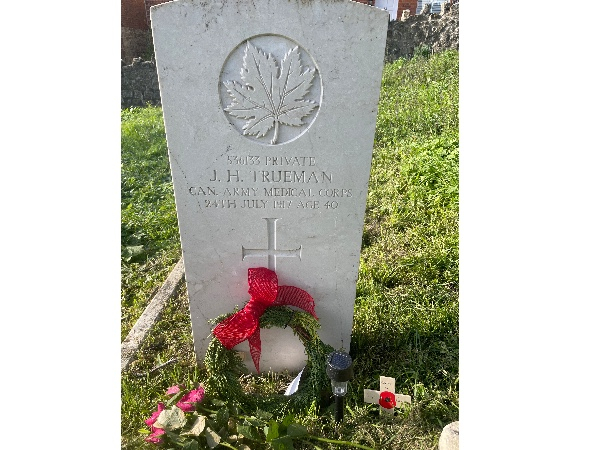
Each year we aim to raise £759 in recognition of the 759 registered war graves from across the commonwealth in our locality.
Please help me us by giving whatever you can use the 'Donate' button.
The Army Benevolent Fund undertakes amazing work in support of soldiers, veterans and their families. You can help raise awareness of their work by sharing my page with your friends and family.
Thank you in advance for your generosity, it means a lot.
My Achievements

Raised £0

Raised £100

Raised £250

Raised £500

Raised £1,000
Raised £1,500
Raised £2,000
Raised £3,000

Raised £5,000
Raised £10,000
Raised £20,000

Raised £40,000

Raised £60,000
Raised £80,000
Raised £100,000
My Updates
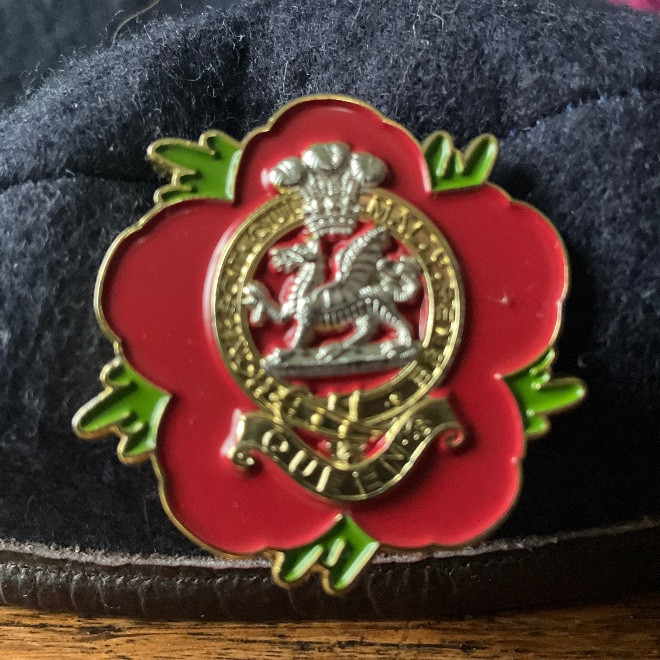
Day three history blog - Allied Forces at Monte Cassino
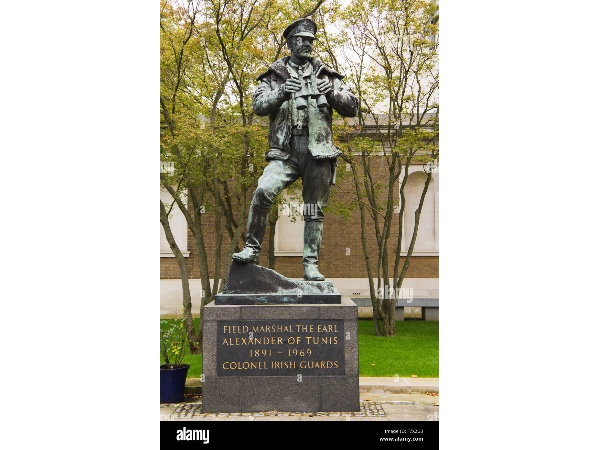
The multinational Allied forces were under the overall command of General Sir Harold Alexander (see image) and were broadly split into two field Armies: the US Fifth Army and the British Eighth Army.
US Fifth Army: Commanded by General Mark W. Clark and comprised of the US II Corps, British X Corps and the French Expeditionary Corps with the US 45th Infantry Division as the Fifth Army strategic reserve.
British Eighth Army: Commanded Lieutenant-General Sir Oliver Leese and comprising of the Polish II Corps, British XIII Corps, Canadian I Corps, Indian Corps, 2nd New Zealand Division and the South African 6th Armoured Division.
The battle stretched over four months and required four separate assaults to overcome the Axis forces. The Allies found themselves having to rotate major formations out of the line of battle due to high levels of casualties and exhaustion. The below paragraphs set out the major units that spearheaded each of the assaults.
First assault: 17 January to 11 February 1944. Fought by American, British and Free French units of the 5th US Army.
Second and third assaults: 15 - 18 February and 15-23 March 1944. Both battles were fought by the 2nd New Zealand Division and 4th Indian Division . During both battles the Gurkha Rifles fought with exceptional bravery at Hangman’s Hill most notably.
Fourth assaults: 11-18 May 1944. This battle was fought as part of a much broader action called Operation Diadem and involved twenty division's of the British Eighth Army.
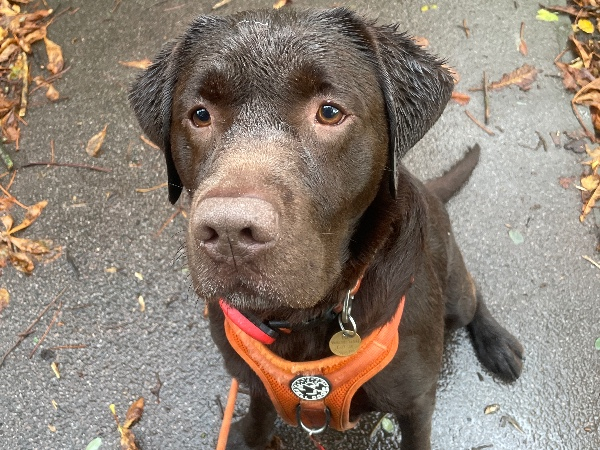
Day three - Mooching with my Lab
Day two - The Battle of Monte Cassino Project.
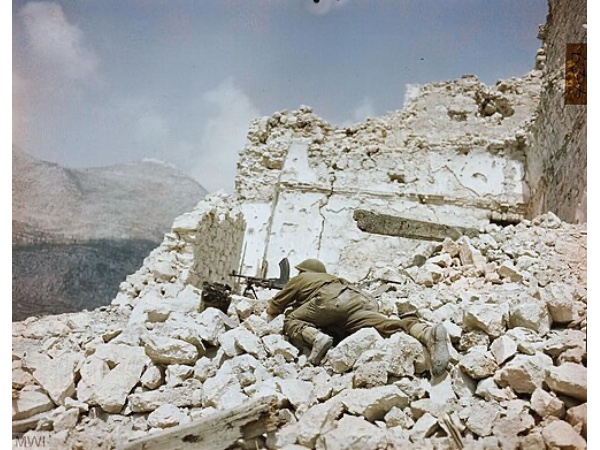
I deliberately re-titled My Frontline Walk project title after coming across this amazing cultural and heritage project, during my research.
Launched in 2019, the project is a collaborative effort involving academic institutions like the University of Cassino, local Italian municipalities, and international recovery organizations (including Project Recover), the initiative treats the entire region as a living museum.
Unlike traditional archival history, this project uses battlefield archaeology to piece together the daily reality of the soldiers who fought here between January and May 1944.
The project's core mission focuses on three distinct pillars:
- Systematic Field Surveys: Teams are actively surveying and documenting surviving defensive positions, bunkers, and trench lines around crucial combat zones like San Pietro Infine, Monte Lungo, and Monte Sammucro.
- MIA Recovery Assistance: By combining archival records with physical excavations, the project helps provide critical context that can aid in locating and identifying personnel still missing in action (MIA).
- The "Normandy Model" of Tourism: The project is actively working with Italian regional governments to preserve these battlefields, creating structured trails and educational resources to turn the area into a premier heritage tourism destination, similar to the Western Front or Normandy.
Day one - Overview of the battle
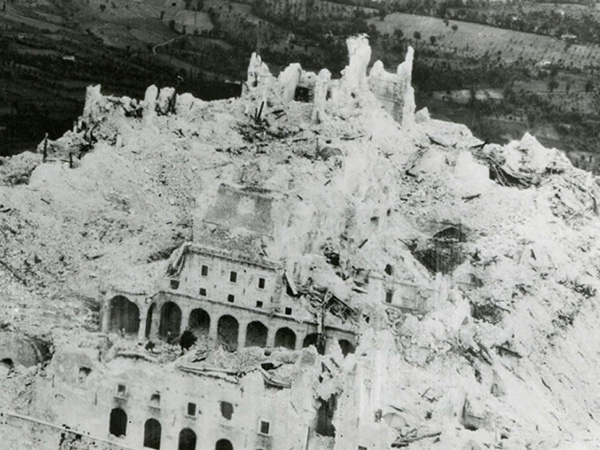
The Battle of Monte Cassino Monastery and the town of Cassino took place between 17 January to 18 May 1944 and is considered to be the bloodiest battle in the Italian Campaign. The battle consisted of four gruelling allied assaults that inflicted twice as many casualties on the Allies as the Germans ( 43-55,000 and 20,000 respectively).
The Allies fielded a multinational force of approximately 240,000 troops, 1,900tanks and 4,000 aircraft from British India, Canada, Free France, New Zealand, Poland, Free France, South Africa, the United Kingdom and the United States of America.
Axis forces numbered approximately 140,000 men from the German 10th Army and the elite 1st Parachute Division fighting from fortified bunkers and hidden artillery networks.
During two of the assaults the Allies controversially resorted to using aerial bombing as a prelude to the infantry assaults. The first flattened the 6th century Benedictine Abbey using 1,400 tonnes of explosives (see picture), with the second flattening the town of Cassino.
The battle ended in an Allied victory after a simultaneous attack by 20 Divisions on 18 May 1944.
My blog aims to explore some of the details around the units who fought in this battle, particularly the contribution made by forebear units of the Princess of Wales’s Royal Regiment who drew recruits from Hampshire, Kent, Surrey, Sussex and Middlesex.
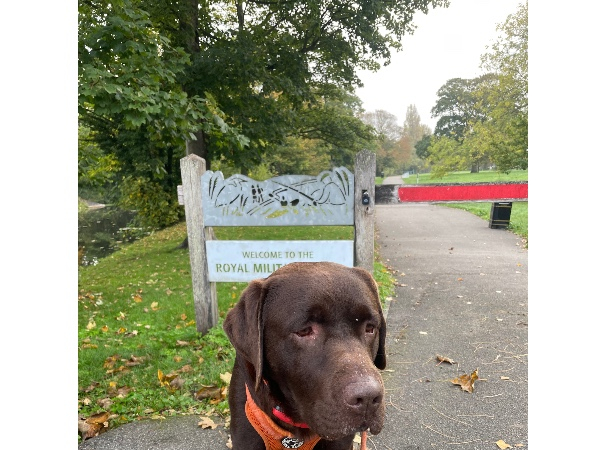
Day two walk update - Royal Military Canal
Day one walk update - WCGC War Grave in Hythe Cemetery
Thank you to my Sponsors

£45.10
Jack & Anita
£28.44
Sue & Steve
Well done Graham and team
£28.44
Margaret
Delighted to be supporting you Graham and Baxter, of course, in your annual challenge. Enjoy.
£28.44
Nigel Canning
Good luck Graham and Baxter on this challenge.
£23.45
Denise Senior
Good luck to you and Baxter - Ray and Denise
£18.83
Graham Dunkley
£17.89


Go for it Graham